
Intumescent Coating Removal – Induction
Removing intumescent paint presents challenges that go well beyond standard blasting. Although the coating is technically a thin film, its actual thickness determines which removal method is effective and which becomes counter productive.
For lighter intumescent layers around 1 mm, conventional blasting is usually enough to break the coating away cleanly. But once the film reaches 2–3 mm or more, it’s reaction to the blasting changes. Instead of fracturing under blast media, the coating absorbs the impact, turning that energy into heat. This heat then chars and hardens the surface, making the film even more stubborn and dramatically increasing time, cost, and media consumption.
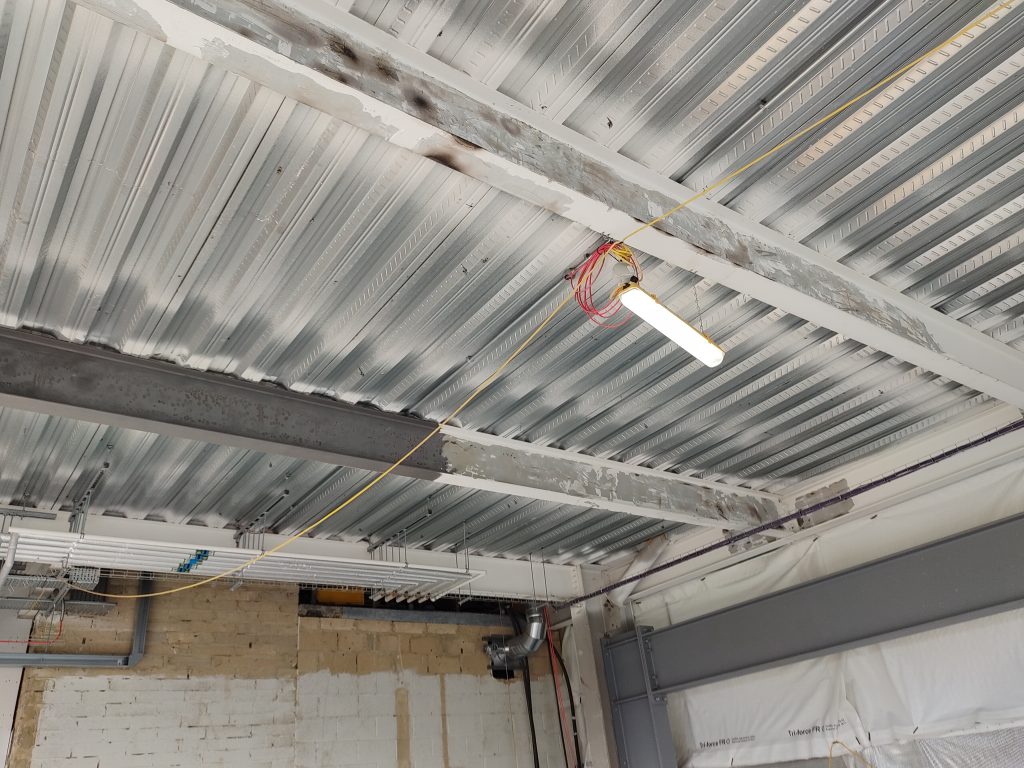
To avoid these issues, we utilise induction heat removal – specifically at this project, DPD Bromley. Induction allows us to heat the steel substrate in a controlled, localised way. The intumescent layer softens, lifts, and separates from the metal, allowing our team to scrape away large areas quickly and safely. Once the bulk of the coating is removed, a final blast delivers a clean, uniform profile ready for inspection or recoating.
The result is a more predictable process, significantly reduced blasting effort, and a clean finish – especially on complex geometries like soffits and overhead steelwork.